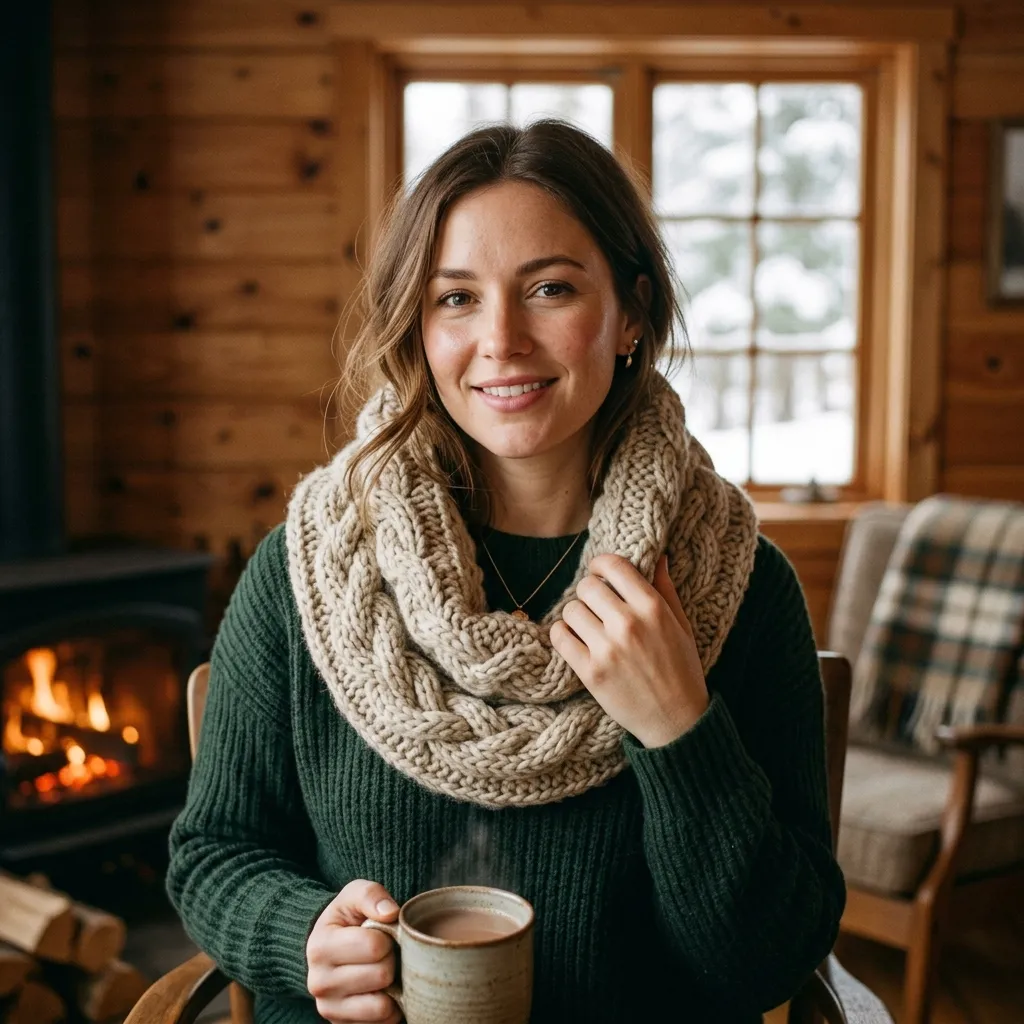
Knitting a cowl (or neck warmer) is incredibly popular, especially for those who have just learned to knit. Unlike a scarf which often needs to be over 60 inches long, a cowl is finished in a fraction of the time.
Why is a cowl the perfect first project?
A tube cowl is simply a cylinder. You don't have to worry about increases and decreases to shape the garment, and you can just knit round and round on a circular needle until it's long enough. You also end up with a garment that has dual functions: warmth, and the ability to pull it up over your nose on the coldest days!
What you need
Before you start knitting your cowl, make sure you have the following tools and materials ready:
Construction of a tube cowl
Needles and shape
The easiest way is to use a short circular needle, usually 16 inches (40 cm) long. When you knit on a circular needle, you don't even have to seam the cowl together at the end!
Patterns and texture
Since the work is a continuous tube, the edges are prevented from curling inwards on the sides. You can therefore safely knit stockinette stitch! But if you want the cowl to be a bit thicker and more elastic, ribbing or seed stitch are fantastic alternatives.
If you knit in pure stockinette stitch (only knit stitches in the round), the bind-off edge at the top and the cast-on edge at the bottom will naturally curl into a "sausage" shape. Many people love this design, but if you want a flat edge, you must knit a few rounds of ribbing (e.g., K1, P1) at the top and bottom.
For a truly professional-looking cowl, try using an Italian Cast-on (also called Tubular Cast-on) if you're starting with ribbing. It creates a beautiful, rounded edge that looks like it came from a high-end boutique and is extremely stretchy!
Suggested Stitch Counts
The number of stitches depends on your yarn weight. Here's a quick guide for a standard adult cowl (approx. 50-60 cm / 20-24 inches circumference):
| Yarn Weight | Gauge (per 10 cm) | Suggested Stitches |
|---|---|---|
| Chunky / Bulky | 12-14 sts | 60 - 80 stitches |
| Worsted / Aran | 16-18 sts | 80 - 100 stitches |
| DK (Double Knitting) | 20-22 sts | 100 - 120 stitches |
| Sport / Fingering | 24-26 sts | 120 - 140 stitches |
Choose the softest yarn
Since the cowl will lie directly against the skin under your chin and behind your neck – some of the body's most sensitive areas for itching – you should avoid coarse sheep's wool intended for outerwear. Choose soft cashmere, alpaca (preferably silk alpaca blends), or extra fine merino wool. If you choose a "fluffy" yarn (e.g., mohair or brushed alpaca) held together with a wool yarn, you'll get an incredibly warm and fuzzy surface.
What yarn is best for a cowl?
Choose a soft yarn that doesn't itch, since the cowl will be in direct contact with the sensitive skin on your neck and face. Alpaca, merino wool, and cashmere blends are excellent choices.
How many stitches do I need for a cowl?
This completely depends on the thickness of the yarn and your gauge. With a chunky yarn you might only need 60-80 stitches, while a thinner yarn (DK/Sport) often requires 100-140 stitches to get the right circumference (approx 20-24 inches / 50-60 cm is standard for a snug cowl).