Knitting Tool
Yarn Substitution Calculator
Never run out of yarn again. Calculate the exact number of skeins based on length and yardage, not just grams.
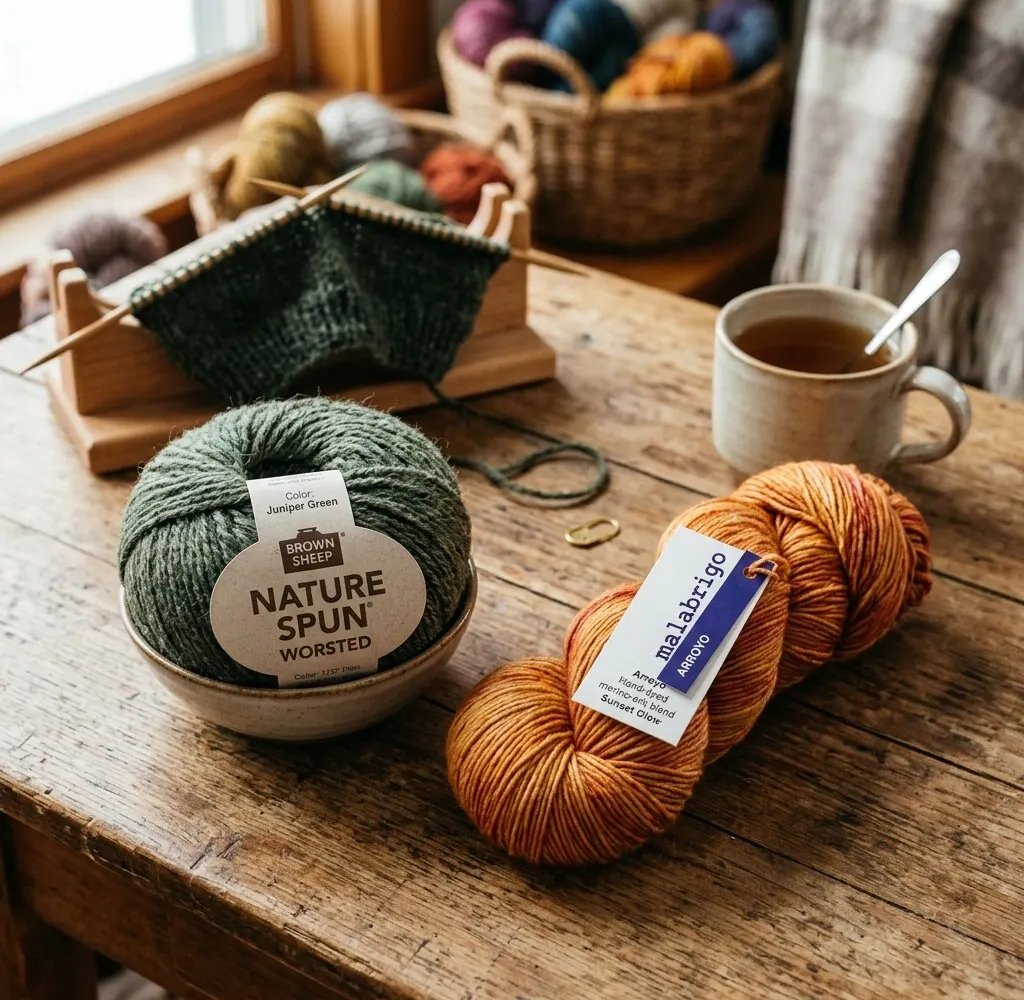
How to use the calculator
- 1 Original yarn
Find the length per skein and total skeins specified in your pattern.
- 2 Substitute yarn
Enter the length per skein for the alternative yarn you plan to use.
- 3 Get result
See exact skeins required with helpful safety buffer recommendations.
Result: Yarn Substitution
Yarn Substitute Calculator
Find out exactly how many skeins you need when switching to a different yarn. Our substitution calculator accounts for different yardages and weights.
A Norwegian version of this page is available on Strikketips.no
Why use a yarn substitute calculator?
Finding the perfect alternative to the yarn specified in a pattern can be a minor science. Many knitters choose to substitute yarn in a pattern due to cost, allergies (such as wool sensitivity), or simply because they prefer a colorway in another quality.
A yarn substitute calculator is indispensable because it ensures you purchase the correct amount of alternative yarn. A common mistake is buying the same weight (in grams) of the new yarn as prescribed by the pattern. But if the original yarn has 164 yards150 m per 1.75 oz50 g, and your new yarn has 120 meters per 50 grams, you will run out of yarn – even if you buy the same weight.
Yarn is often sold in 50g or 100g skeins, but the total yardage is the defining factor. This is why skein yardage is the most important calculation at play.
How to convert yarn manually
If you want to understand the math behind yarn substitutions, the formula is quite simple. Here is a step-by-step example:
Formula for yarn substitution
Number of alternative skeins = (Number of original skeins × Yardage of original yarn) ÷ Yardage of new yarn
Example
Say the pattern requires 8 skeins (1.75 oz / 50 g each) with 164 yards150 m per skein, and you want to switch to a yarn with 219 yards200 m per 1.75 oz50 g skein:
- Calculate total length of original yarn: 8 skeins × 164 yd150 m = 1,312 yards1,200 m
- Calculate number of new skeins: 1200m ÷ 200m = 6 skeins
As you can see, you only need 6 skeins (300g) of the new yarn, even though the pattern requested 8 skeins (400g) of the original. This is because the new yarn has a longer yardage.
Always round up to the nearest whole skein. It is much better to have a bit left over than to run out in the middle of a project. In the example above, you should buy 7 skeins to be safe.
Tips for perfect substitutions
The significance of fiber content
Even if the yardage is a perfect match, different fibers behave differently. Wool is elastic and retains its shape well, while cotton and linen are heavier and tend to drape or sag. When substituting, try to choose an alternative yarn with similar characteristics to the original.
Yarn substitution checklist
- Check the gauge: The alternative yarn should have a similar suggested gauge as the original. Use our gauge calculator to compare them.
- Consider texture: A smooth yarn will give a completely different look than a halo/mohair yarn, even if the yardage matches.
- Knit a swatch: This is the most crucial step! Even if the yardages match, your personal tension can vary between different fiber blends.
- Buy extra: It is always safer to have one skein too many. Many shops allow returns of unopened yarn skeins.
- Check care instructions: If the original yarn is superwash/machine-washable but the alternative requires handwashing, this may affect your final choice.
What does yardage mean?
Yardage (or length) tells you how many yards (meters) there are per 1.75 oz50 g or 3.5 oz100 g of yarn. This is crucial when switching yarn, as different yarn types have different weights relative to their length.
Can I switch to a yarn with a different gauge?
It is recommended to choose a yarn that has the same suggested gauge as the original yarn. If not, you must knit a test swatch and potentially adjust using our gauge calculator.