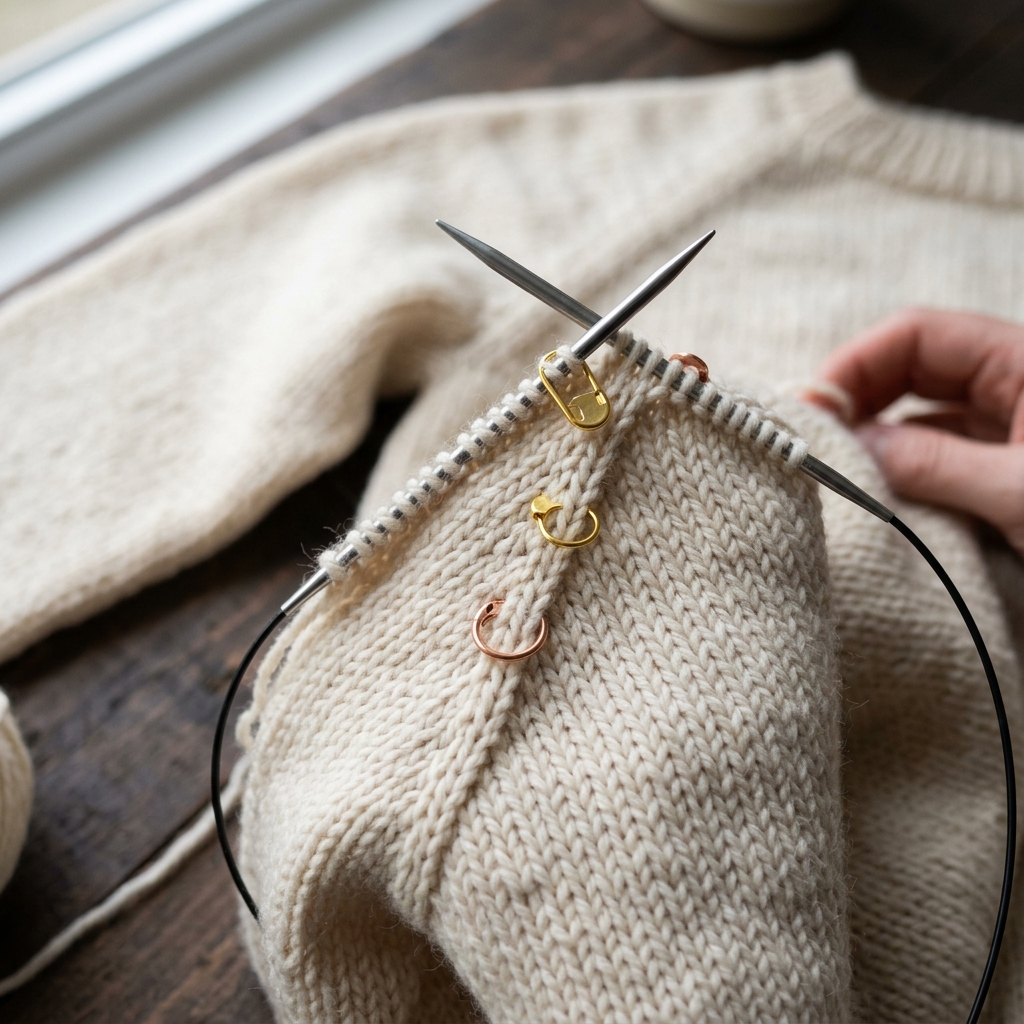
In 2026, knitting is more than just stitches; it is engineering. We see a significant shift toward techniques that minimize finishing work and maximize fit. Knitters today are not afraid to tackle complex constructions as long as the result is a garment that fits like a glove.
Top-Down: The Ultimate Control
Knitting from the top down is no longer just an alternative method – it is the preferred method in 2026. The advantages are obvious:
- Try-on Capability: You can test sleeve length and fit before you are even halfway through.
- No Assembly: When you bind off the last stitch on the body, the garment is practically finished.
- Easy Adjustment: Want a shorter model or a more oversized look? You see it immediately.
Focus: The Contiguous Method
Inspired by Susie Myers, the Contiguous method has taken off in 2026. It mimics the look of a set-in sleeve but is knitted entirely seamlessly from the top. This provides a professional appearance that was previously reserved for industrial knitting.
Modular Knitting and 'Franken-knitting'
Another growing trend is modular knitting. Instead of knitting large surfaces, we build the garment from smaller modules that are knitted together as you go. This is especially popular for:
- Scrap Yarn Projects: Each module can have its own color or quality.
- Travel Knitting: It's much easier to take a small module with you on the train than an entire sweater.
- Unique Geometry: The technique allows for angles and shapes that are difficult to achieve with traditional knitting.
Magical Short Rows
In 2026, we use short rows for more than just shaping the neck. We see them used to create asymmetrical borders, shape the bust for a better fit, and add decorative elements like waves and curves in the middle of an otherwise flat piece. German Short Rows have established themselves as the preferred method due to their nearly invisible transition.
Expert Advice for 2026
Don't be afraid to use stitch markers abundantly! With the advanced constructions we're seeing this year, markers are your best friends for keeping track of increases, decreases, and pattern repeats without having to count constantly. Plus, let our Increase & Decrease Assistant do the technical math for you.