Knitting Tool
Yarn Calculator
How much yarn a project needs, and how much of a substitute yarn — in yards and skeins.
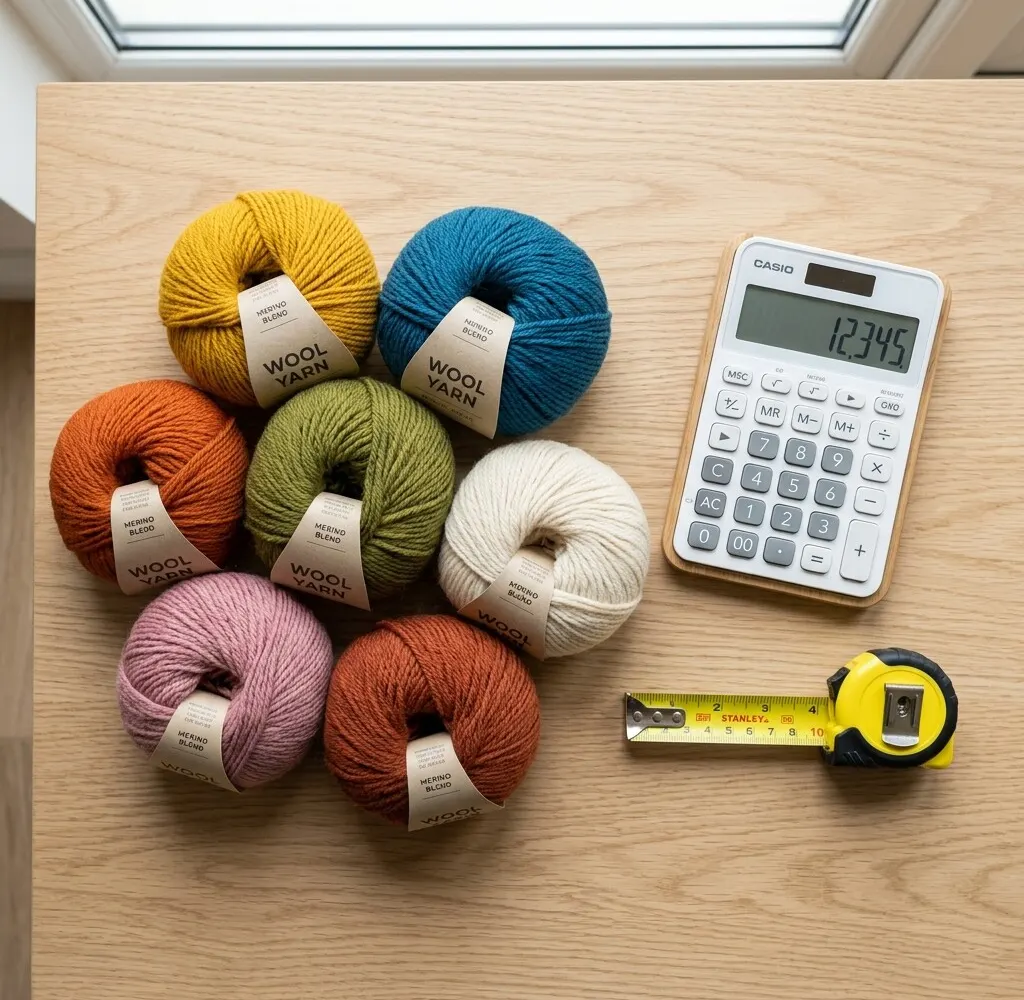
Why use a yarn calculator?
Two questions come up before a project: how much yarn do I need, and — if I'm not using the pattern's yarn — how much of mine? Our yarn calculators answer both. Explore all of our free knitting calculators right here.
They work from length — yards or meters — rather than weight, because two yarns of the same weight can hold very different lengths, and it's the length that runs out.
Our Yarn Calculators
Choose the right tool for your project
Yarn Substitution Calculator
Recalculate skeins and total yardage when substituting yarn with different yardage or skein weights.
- Compare yardages
- Get exact skein count
- Avoid running out of yarn
Yardage Calculator
Work out the total yardage of a project and how many skeins to buy, from the pattern's total weight and your yarn's ball band.
- Total yardage from weight
- Skeins to buy, rounded up
- Plan yarn purchases
Gauge Calculator
Calculate exact stitch and row counts from your swatch gauge – or determine how many stitches to cast on.
- Stitch calculation
- Needle recommendations
- Size adjustments
How to calculate yarn requirements
Find the yardage
Check the ball band for the length per skein, printed for example as "164 yds / 1.75 oz" or "150 m / 50 g".
Calculate total yards needed
If the pattern calls for 14 oz400 g of a yarn at 164 yds / 1.75 oz150 m / 50 g: (14 oz ÷ 1.75 oz) × 164 yds = 1,312 yards(400 g ÷ 50 g) × 150 m = 1,200 meters total yarn required.
Use the calculator for precise substitution
Enter the pattern's skein count and both yarns' yardage into the substitution calculator; it rounds the answer up to whole skeins.
What we do
We buy one skein more than the calculator says when we substitute yarn. A leftover skein is better than running out on the second sleeve.
Yarn weights at a glance
We'd pick a substitute in the same weight category as the pattern's yarn. The table gives each category's gauge and needle range; yardage varies too much within a category to list here — see the ball band.
| Yarn Weight | Gauge (per 4" / 10 cm) | Needles | Common Uses |
|---|---|---|---|
| Lace CYC 0 · Lace | 33-40 sts per 4 in10 cm | US 000–1 (1.5–2.25 mm) | Shawls, Lace knitting, Lightweight wraps |
| Fingering CYC 1 · Super Fine | 27-32 sts per 4 in10 cm | US 1–3 (2.25–3.25 mm) | Socks, Light sweaters, Baby garments, Shawls |
| Sport CYC 2 · Fine | 23-26 sts per 4 in10 cm | US 3–5 (3.25–3.75 mm) | Light sweaters, Baby garments, Accessories |
| DK CYC 3 · Light | 21-24 sts per 4 in10 cm | US 5–7 (3.75–4.5 mm) | Sweaters, Cardigans, Hats, Mittens |
| Worsted CYC 4 · Medium | 16-20 sts per 4 in10 cm | US 7–9 (4.5–5.5 mm) | Sweaters, Blankets, Accessories, Home decor |
| Bulky CYC 5 · Bulky | 12-15 sts per 4 in10 cm | US 9–11 (5.5–8 mm) | Blankets, Chunky sweaters, Scarves, Quick knits |
| Super Bulky CYC 6 · Super Bulky | 7-11 sts per 4 in10 cm | US 11–17 (8–12.75 mm) | Blankets, Cushions, Chunky cowls, Speed knitting |
| Jumbo CYC 7 · Jumbo | 6 sts and fewer per 4 in10 cm | US 17 and larger (12.75 mm and larger) | Arm knitting, Large blankets, Cushions, Home decor |
Categories, gauge ranges and needle ranges follow the Craft Yarn Council's Standard Yarn Weight System; US needle numbers follow its knitting needle size chart.
Yarn Substitution Checklist
- Gauge Match: Swatch the substitute yarn and check that it reaches the pattern gauge without making the fabric too dense or too loose.
- Total Yardage: Calculate your requirement in total yards rather than weight alone.
- Fiber Drape & Elasticity: In our experience wool springs back; cotton and linen are heavier and drape more.
- Airy yarns: a brushed yarn like mohair is light for its thickness, so we'd expect it to need fewer grams for the same size of fabric — another reason to compare length, not weight.
Frequently Asked Questions about Yarn Calculators
How do I calculate yarn requirements?
To calculate yarn amount you need the total weight the pattern specifies, plus the weight and yardage of one skein. The formula is (pattern weight ÷ skein weight) × skein yardage = total length you need. The skein weight has to be in the calculation: a 3.5 oz100 g skein holding 220 yards200 m and a 1.75 oz50 g skein holding 220 yards200 m are two entirely different yarns. Our yarn calculator does this automatically.
How do I use a yarn calculator?
Pick the calculator for your question. For how much yarn a pattern needs in yards and skeins, use the yardage calculator: enter the pattern's total weight and one skein's weight and length. For how many skeins of a different yarn, use the yarn substitution calculator: enter the pattern's skein count and both yarns' yardage.
What's the difference between a yarn substitution calculator and a yardage calculator?
A yarn substitution calculator determines how many skeins you need when switching to a different yarn with different yardage. A yardage calculator converts between weight and length based on the yarn's specifications.
Why is yardage important when calculating yarn amounts?
Yardage tells you how much length there is in a skein: the ball band gives yards (meters) per skein, together with the skein's weight. Even if two yarns have the same weight, they can have completely different lengths – and it's the length that determines if you have enough yarn for your project.
Can I use the yarn calculator for all yarn types?
Yes, as long as you know the yardage and skein weight, which are on the ball band. The calculators don't know anything about the fiber; they only do the arithmetic.
A Norwegian version of this page is available on Strikketips.no
Ready to Start Knitting?
Explore all of our free interactive knitting calculators and tools.
View All Tools →