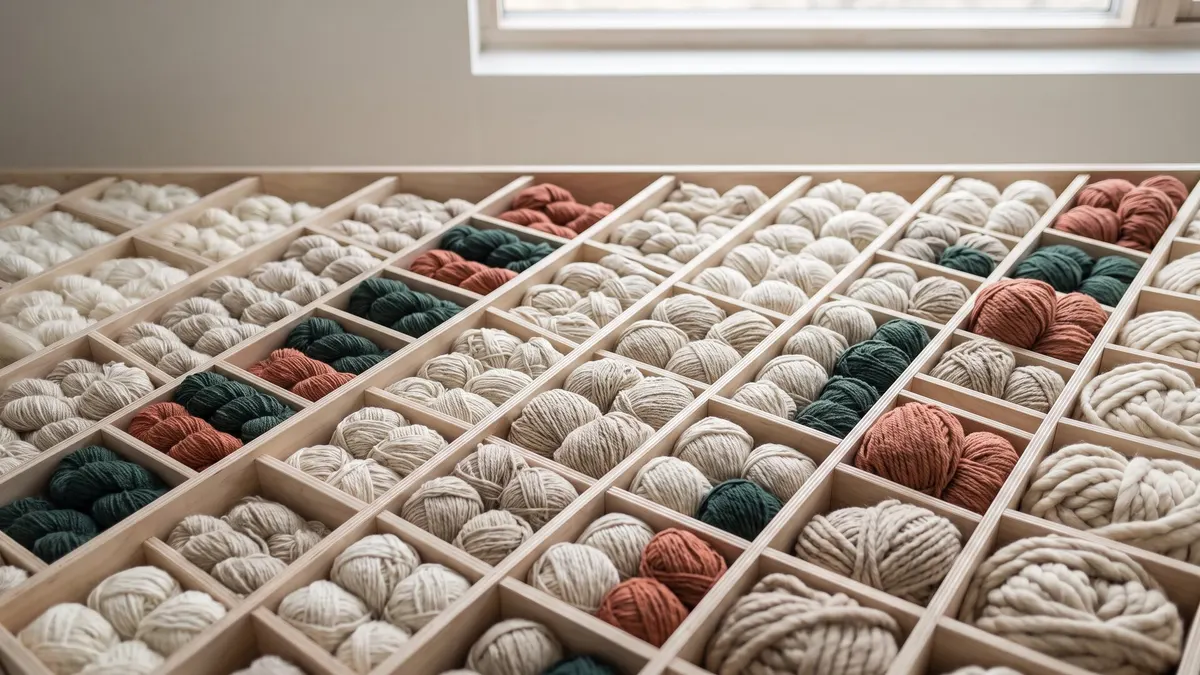
In knitting, yarn weight refers to the thickness of the strand, not how much a skein weighs on a scale. The Craft Yarn Council (CYC) standard categorizes yarn into numbers 0 (Lace) through 7 (Jumbo) to help you choose the right needles, predict gauge, and substitute yarns with confidence.
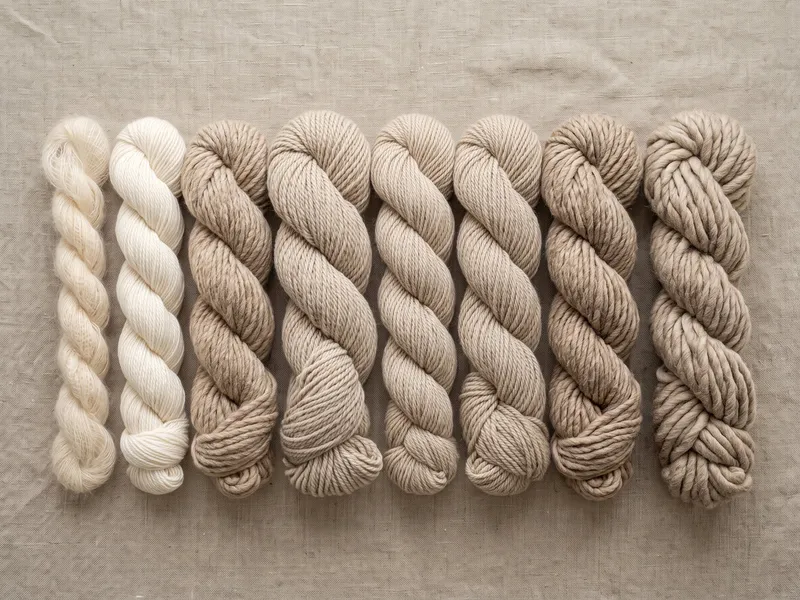
Standard Yarn Weight Chart (CYC 0–7)
Standard gauge ranges are measured over 4 inches10 cm of stockinette stitch. Recommended needle sizes are typical baselines; your personal tension always decides the final needle size.
| CYC # | Category | Stockinette Gauge (per 4 in / 10 cm) | US Needles (Metric) | WPI | Details |
|---|---|---|---|---|---|
| 0 | Lace | 33–40 sts | US 000–1 (1.5–2.25 mm) | 30–40+ WPI | Guide → |
| 1 | Super Fine / Fingering | 27–32 sts | US 1–3 (2.25–3.25 mm) | 14–30 WPI | Guide → |
| 2 | Fine / Sport | 23–26 sts | US 3–5 (3.25–3.75 mm) | 12–18 WPI | Guide → |
| 3 | Light / DK | 21–24 sts | US 5–7 (3.75–4.5 mm) | 11–15 WPI | Guide → |
| 4 | Medium / Worsted | 16–20 sts | US 7–9 (4.5–5.5 mm) | 9–12 WPI | Guide → |
| 4 | Aran | 16–18 sts | US 8–10 (5.0–6.0 mm) | 9–12 WPI | Guide → |
| 5 | Bulky | 12–15 sts | US 9–11 (5.5–8.0 mm) | 6–9 WPI | Guide → |
| 6 | Super Bulky | 7–11 sts | US 11–17 (8.0–12.75 mm) | 5–6 WPI | Guide → |
| 7 | Jumbo | 6 sts and fewer | US 17 and larger (12.75 mm and larger) | 1–4 WPI | Guide → |
Each bar is a category's gauge range from the chart above. CYC 7 has no lower limit (6 stitches and fewer), so its bar has a dashed outline.
Explore Each Yarn Weight Category
Select a weight category below for detailed gauge charts, project recommendations, common yardages, and tested US yarn brands.
Lace
Cobweb, Thread, 1-ply / 2-ply
Best for: Airy lace shawls, fine doilies, lightweight summer wraps
Explore Lace Guide →Super Fine / Fingering
Sock, Baby, 4-ply
Best for: Hand-knit socks, baby garments, lightweight cardigans, shawls
Explore Super Fine / Fingering Guide →Fine / Sport
Baby, 5-ply
Best for: Light sweaters, baby blankets, spring accessories, textured socks
Explore Fine / Sport Guide →Light / DK
Double Knitting, Light Worsted, 8-ply
Best for: Sweaters, cardigans, baby blankets, children's clothes, hats
Explore Light / DK Guide →Medium / Worsted
Afghans, 10-ply
Best for: Warm winter sweaters, beanies, mittens, throw blankets, home decor
Explore Medium / Worsted Guide →Aran
Heavy Worsted, Fisherman, 10-ply
Best for: Cable knit sweaters, winter coats, textured outerwear
Explore Aran Guide →Bulky
Chunky, Craft, Rug, 12-ply
Best for: Chunky winter hats, cowl scarves, fast throw blankets
Explore Bulky Guide →Super Bulky
Super Chunky, Roving, 14–16 ply
Best for: Rapid one-evening hats, thick cowls, cushions
Explore Super Bulky Guide →Jumbo
Roving, arm-knitting yarn
Best for: Giant arm-knit blankets, rugs, thick baskets
Explore Jumbo Guide →How to Measure Unlabeled Yarn: The WPI Method
If you have an unlabeled mystery skein from your stash, measuring Wraps Per Inch (WPI) is the most reliable way to identify its CYC weight category:
Wrap the Yarn
Take a standard ruler, wooden pencil, or WPI tool. Wrap the yarn snugly around it several times. The strands should touch gently side-by-side without overlapping and without being pulled taut.
Measure Across 1 Inch
Use your ruler to count how many complete wraps fit within exactly 1 inch (2.54 cm).
Match to the Standard Chart
Match your count to the Craft Yarn Council\u2019s WPI bands — 30–40+ for Lace, 14–30 Super Fine, 12–18 Fine, 11–15 Light, 9–12 Medium, 6–9 Bulky, 5–6 Super Bulky, 1–4 Jumbo. They overlap by design, so treat the result as a shortlist rather than an answer.
Two yarns with identical WPI may knit up differently depending on fiber density (e.g., heavy cotton vs lofty woolen-spun fleece). Always knit a gauge swatch over 4 inches10 cm before starting a fitted garment.
Key Rules for Substituting Yarn Weights
When swapping yarns in a pattern, matching the category name (e.g., "Worsted") is only the first step. To ensure your finished project fits and drapes correctly, keep these 3 rules in mind:
- 1. Match Stitch and Row Gauge, Not Just Weight: A pattern written for 18 sts per 4 in cannot easily absorb a yarn that gives 21 sts per 4 in without changing the garment size.
- 2. Calculate Total Yardage (Not Weight in Grams/Ounces): Denser fibers like alpaca, cotton, or silk have fewer yards per ounce than lofty wool. Use our Yarn Requirement Calculator to ensure you buy enough skeins.
- 3. Holding Strands Together (Double Stranding): Holding two strands of lace weight produces roughly fingering or sport weight; holding two strands of fingering creates DK or light worsted weight. Use our Yarn Substitution Calculator to test combinations.
Frequently Asked Questions
What is the most popular yarn weight for sweaters?
DK (CYC 3) and Worsted (CYC 4) are the weights adult sweater patterns most often call for. DK creates a versatile garment with gentle drape suitable for indoor layering, while Worsted creates a warm, sturdy winter sweater that knits up quickly.
Can I substitute Aran for Worsted yarn?
Both are CYC Category 4 (Medium) — the standard does not split them. In practice Aran is spun slightly heavier than traditional Worsted, so substituting one for the other without swatching often produces a stiffer fabric or an oversized garment. Always check your gauge over 4 inches10 cm before starting.
What does 'ply' mean in UK and Australian patterns?
In British and Australian knitting conventions, 'ply' refers to the thickness category, not the number of physical strands spun into the thread. For example, 4-ply corresponds to US Fingering weight, and 8-ply corresponds to US DK weight. Modern 8-ply yarn can be spun from two, three, or four physical plies.
How do I find the weight of yarn without a label?
Use the Wraps Per Inch (WPI) method: wrap the yarn snugly around a ruler or pencil without stretching it, with strands touching but not overlapping. Count how many wraps fit into one inch and match it to the Craft Yarn Council’s WPI chart. Note that the bands overlap: 9–12 wraps covers Worsted (CYC 4) and 11–15 covers DK (CYC 3), so a count of 11 or 12 fits either. WPI narrows the field — a gauge swatch settles it.
Yarn weight categories, their standard gauge ranges and the recommended needle sizes on this page follow the Craft Yarn Council's Standard Yarn Weight System. Needle size equivalents are cross-checked against the CYC knitting needle size chart, and the WPI column against CYC\u2019s wraps-per-inch chart. The Aran row is the one exception: the Craft Yarn Council has no Aran category and places Aran in Category 4 alongside Worsted. The narrower gauge and larger needles we list for it are our own summary of how mills label Aran yarn in practice, not part of the standard.