Dictionary
Knitting Dictionary
From gauge to Magic Loop – find explanations for all the knitting terms you're wondering about.
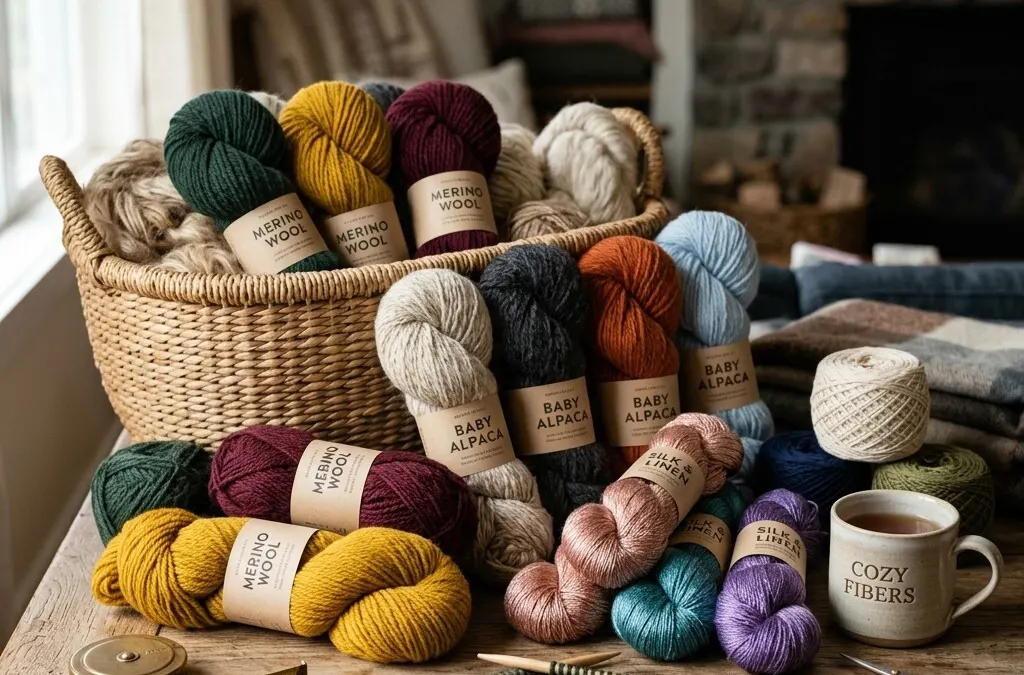
Find your way through knitting terms
Our knitting dictionary is a complete reference work for everyone who knits. Here you'll find explanations of common knitting words, techniques and concepts. Whether you're looking for specific techniques, want to learn more about yarn, or need an overview of equipment, we have the explanations you need.
Many of the terms here are also elaborated on in our in-depth guides, such as our comprehensive guide on gauge.
Yarn
Acrylic
Acrylic is a synthetic fiber made from petroleum-based materials, known for being affordable, durable, and easy to wash.
Read more →Alpaca
Alpaca is a luxurious animal fiber from the alpaca, known for being very soft, warm, and lightweight, but with less natural elasticity than wool.
Read more →Ball Band
The ball band is the paper label around a skein of yarn that lists key information like yardage, fiber content, recommended needle size, and gauge.
Read more →Cashmere
Cashmere is one of the softest and most luxurious animal fibers, harvested from the undercoat of the cashmere goat, giving knitting an exceptionally soft feel.
Read more →Cotton
Cotton is a plant fiber that produces heavy, smooth, breathable knitted fabric without wool's natural elasticity, well suited to summer garments.
Read more →Hank
A hank is yarn wound into a loose, circular bundle rather than a solid ball, and must be wound with a swift and ball winder before use.
Read more →Merino Wool
Merino wool comes from the Merino sheep and is known for its fine, soft fibers, giving knitted fabric a comfortable feel against the skin without itching.
Read more →Mohair
Mohair is a fluffy, lustrous fiber from the Angora goat, often spun into thin yarns to give a fuzzy, hazy look with a distinctive sheen.
Read more →Ombré / Gradient Yarn
Ombré (gradient) yarn gradually shifts from one color or shade to another along the skein, creating a smooth flow of color through the knitted fabric.
Read more →Plied Yarn
Plied yarn is made by twisting two or more thinner strands together, giving the yarn strength, evenness, and a rounder structure.
Read more →Superwash
Superwash is a treatment that either removes or coats the outer scales of the wool fiber, allowing the yarn to withstand regular machine washing without felting.
Read more →WPI (Wraps Per Inch)
WPI (Wraps Per Inch) is a simple method for measuring yarn weight by wrapping yarn around a ruler and counting the number of wraps in one inch.
Read more →Yardage / Meterage
Yardage (or meterage) is the length of yarn in a skein or per 100 grams. This measurement is crucial when calculating yarn amount for substitutions.
Read more →Yarn Amount
Yarn amount refers to how much yarn you will need to complete your knitting project, measured in total grams, number of skeins, or total yardage.
Read more →Yarn Substitution
Yarn substitution is the process of replacing the yarn specified in a knitting pattern with a different yarn while maintaining the correct gauge and yardage.
Read more →Yarn Weight
Yarn weight describes the thickness of the yarn, typically categorized from very thin lace weight to extremely thick chunky and jumbo yarns.
Read more →Techniques
Backward Loop Cast-On
Backward loop cast-on is the simplest cast-on method, twisting yarn around the thumb and lifting the loop onto the needle. Quick but not very elastic.
Read more →Bottom-Up Knitting
Bottom-up knitting is the traditional construction method where a sweater is knitted from the ribbing upward toward the shoulders, often in separate pieces.
Read more →Buttonhole
A buttonhole is a small opening knitted into a button band, made by binding off a few stitches and casting on new ones in the same row.
Read more →Cable Cast-On
Cable cast-on is a method that creates a firm, twisted edge by knitting new stitches between the last two stitches on the needle.
Read more →Cable Knitting
Cable knitting is a texture technique where groups of stitches cross over each other using a cable needle to create a braided or cabled pattern.
Read more →Central Double Decrease (CDD)
Central double decrease (CDD) reduces three stitches to one in a single step, typically used at the center top of hats and in lace patterns.
Read more →Colorwork
Colorwork is an umbrella term for techniques like Fair Isle and intarsia, where multiple yarn colors are knitted within the same row to form patterns.
Read more →Contiguous Method
The contiguous method is a top-down knitting technique that simulates a set-in sleeve and shoulder seam, offering a tailored fit without seams.
Read more →Decreases
Decreases are techniques used to reduce the number of stitches on your needles, making the fabric narrower to shape necklines, sleeves, and heels.
Read more →Double Stitch
A double stitch is a technique used in German Short Rows, where the yarn is pulled tightly around the stitch so it 'doubles up', marking a turn without holes.
Read more →Drop Shoulder
Drop shoulder is a simple sleeve construction where the shoulder seam falls outside the actual shoulder, and the sleeve is sewn or knitted straight in without shaping.
Read more →Dropped Stitch
A dropped stitch is a stitch that has fallen off the needle unintentionally and begun to unravel down the fabric, and should be fixed with a crochet hook.
Read more →Edge Stitch
The edge stitch is the outermost stitch in each row, often worked or slipped in a specific way to give the fabric a neater, more even border.
Read more →Elastic Edge
Elastic edge refers to cast-on and bind-off methods designed for extra stretch, essential for ribbing, necklines, and cuffs.
Read more →Entrelac
Entrelac is a technique of knitting small, offset rectangles and triangles that give the fabric a woven, basket-like appearance.
Read more →Fair Isle
Fair Isle is a colorwork technique where two yarn strands are carried across the whole round, with short floats on the wrong side between color changes.
Read more →Finishing / Seaming
Finishing and seaming is the final stage of a knitting project where loose pieces are sewn together, ends are woven in, and buttons or zippers attached.
Read more →Frogging
Frogging means unraveling your knitting to fix a mistake or start over, named for the 'rip-it, rip-it' sound resembling a frog's croak.
Read more →Garter Stitch
Garter stitch is made by knitting every stitch in every row, producing a thick, ridged fabric that lies flat without curling at the edges.
Read more →German Short Rows
German Short Rows are a modern technique for knitting short rows without visible gaps, utilizing double stitches instead of the classic wrap-and-turn.
Read more →Heel Flap
The heel flap is the rectangular, densely knitted section on the back of a sock heel, worked flat before the heel itself is shaped with short rows.
Read more →Increases
Increases are techniques used to add new stitches to make your knitting wider, commonly used for shaping sleeves, shoulders, and necklines.
Read more →Intarsia
Intarsia is a colorwork technique where each color block is knitted with its own bobbin without floats, suited to large, isolated color areas or motifs.
Read more →Italian Bind-Off
Italian bind-off is a highly elastic finishing technique sewn with a tapestry needle, giving a professional and flexible edge to your ribbing.
Read more →Italian Cast-On
Italian cast-on is a highly elastic cast-on method that mimics knitted ribbing, often paired with Italian bind-off for matching stretchy edges.
Read more →K2tog (Knit Two Together)
K2tog means knitting two stitches together as one, reducing the stitch count by one. The decrease slants to the right.
Read more →KFB (Knit Front and Back)
KFB is a simple increase technique where you knit into both the front and back loop of the same stitch, turning one stitch into two.
Read more →Lace Knitting
Lace knitting combines yarn overs and decreases to create sheer, decorative holes in the fabric, forming intricate openwork patterns.
Read more →Lifeline
A lifeline is a strand of smooth waste yarn threaded through a full round of stitches, making it safe to frog back to a known point if you lose your place.
Read more →M1L (Make 1 Left)
M1L is an increase technique that creates a new stitch by lifting the strand between two stitches and knitting it twisted, so the increase slants left.
Read more →M1R (Make 1 Right)
M1R is an increase technique that creates a new stitch by lifting the strand between two stitches and knitting it twisted, so the increase slants right.
Read more →Magic Loop
Magic Loop is a popular technique for knitting small circumferences on a long circular needle by pulling out a cable loop, ideal for socks and sleeves.
Read more →Modular Knitting (Domino Knitting)
Modular knitting (domino knitting) is a technique of knitting connected squares or triangles, each picked up from the last, without any sewing.
Read more →Mosaic Knitting
Mosaic knitting is a colorwork technique where patterns form by slipping stitches in a contrasting color, using only one color per round.
Read more →Neckline
The neckline is the shape and size of the opening around the neck of a sweater, usually shaped with decreases or short rows for a good fit.
Read more →Pick Up Stitches
Picking up stitches means knitting new stitches into the edge of existing fabric, such as at a neckline, button band, or after a heel flap.
Read more →Provisional Cast-On
Provisional cast-on is a temporary cast-on that can later be unpicked, freeing live stitches to be knitted in the opposite direction.
Read more →PSSO (Pass Slipped Stitch Over)
PSSO means lifting a previously slipped stitch over a newly knitted stitch and off the needle, often combined with a slip stitch to form a decrease.
Read more →Raglan
Raglan is a type of sleeve where the seam runs diagonally from the underarm to the neckline, creating a popular seamless construction for sweaters.
Read more →Ribbing
An elastic knitting pattern alternating between knit and purl stitches. Often used for cuffs, necklines, and hem edges to provide stretch and fit.
Read more →Saddle Shoulder
Saddle shoulder is a sleeve construction where a narrow strip of the sleeve continues over the shoulder, forming part of the yoke between neck and underarm.
Read more →Seamless Knitting
Seamless knitting means knitting a garment in one piece in the round, without sewing pieces together afterward, as with raglan or top-down sweaters.
Read more →Seed Stitch
Seed stitch is made by alternating knit and purl stitch by stitch and row by row, giving the fabric an even, textured, grain-like surface.
Read more →Set-In Sleeve
A set-in sleeve is a classic sleeve construction with a shaped sleeve cap that is knitted or sewn into a correspondingly shaped armhole for a closer fit.
Read more →Short Rows
Short rows are a technique of turning the work before finishing a full row, creating three-dimensional shaping without adding or removing stitches.
Read more →Slip Stitch
A slip stitch is moved from the left to the right needle without being knitted, used in edges, decrease combinations, and mosaic knitting.
Read more →SSK (Slip, Slip, Knit)
SSK is a decrease technique where two stitches are slipped individually and knitted together through the back loop, slanting the decrease left.
Read more →Steeking
Steeking is the technique of cutting into knitted fabric to create openings for sleeves or cardigan fronts, requiring careful securing of stitches first.
Read more →Stockinette Stitch
The most fundamental knitting pattern: knit all stitches on the right side and purl on the wrong side. Creates a smooth, classic fabric surface.
Read more →Sweater Body
The sweater body is the main section of a sweater or cardigan covering the torso, meaning the front and back considered together, without sleeves or yoke.
Read more →Three-Needle Bind-Off
Three-needle bind-off joins two sets of live stitches while binding off, creating a sturdy seam often used to join shoulders.
Read more →Toe Shaping
Toe shaping is the gradual decreasing of stitches toward the end of a sock or mitten, rounding off the tip and giving it its characteristic toe shape.
Read more →Top-Down Knitting
Top-down knitting is a construction method where a sweater is knitted from the neckline downward, allowing you to try it on as you go and knit seamlessly.
Read more →Turning the heel
Turning the heel is the shaping of a sock's heel so that it curves under the foot, transitioning a straight tube into a comfortable sock shape.
Read more →Yarn Over (YO)
A yarn over is made by wrapping the yarn over the right needle without knitting a stitch. Used to create lace holes or increase stitch count.
Read more →Yoke
The yoke is the top, shaped section of a sweater around the shoulders where the body and sleeves join, and is often where colorwork patterns are placed.
Read more →Equipment
Ball Winder
A ball winder rolls yarn from a hank or loose skein into a loose, center-pull ball that is easier to knit from without the yarn tangling.
Read more →Blocking Mats
Blocking mats are foam mats you pin knitted fabric to during blocking, allowing the garment to dry in the correct shape and size.
Read more →Cable Needle
A cable needle is a short, often bent needle used to hold stitches temporarily while knitting cable patterns and braids.
Read more →Circular Needles
Circular needles feature two pointed needle tips connected by a flexible cable, allowing you to easily knit sweaters, hats, and sleeves in the round.
Read more →Double-Pointed Needles (DPN)
Double-pointed needles (DPNs) are short needles with a point at each end, used in sets of four or five to knit narrow tubes like socks, mittens, and hats.
Read more →Knitting calculator
A knitting calculator is a digital tool that works out stitch counts, even distribution of increases and decreases, or yarn amounts from your gauge and measurements.
Read more →Knitting Needles
Knitting needles are the main tool of knitting, available as straight needles, circular needles, and double-pointed needles, in materials like wood, metal, and plastic.
Read more →Needle Size
Needle size refers to the thickness of your knitting needles, measured in millimeters, US sizes, or UK sizes, directly impacting your knitting gauge.
Read more →Point Protectors
Point protectors are small caps placed on the tips of knitting needles to keep stitches from sliding off during transport or breaks in your work.
Read more →Stitch Holder
A stitch holder is a large, lockable safety-pin-like tool or a strand of waste yarn that holds live stitches safely while they wait to be knitted again.
Read more →Stitch Markers
Stitch markers are small rings or clips placed on the knitting needle to mark important positions like round beginnings, pattern repeats, or increases.
Read more →Tapestry Needle
A tapestry needle is a large, blunt sewing needle with a big eye, used to seam knitted pieces, weave in ends, and perform techniques like Italian bind-off.
Read more →Yarn Swift
A yarn swift is a rotating stand that holds a hank of yarn stretched out while it is wound into a ball, preventing the yarn from tangling in the process.
Read more →Basics
Bind-off / Cast-off
Bind-off (or cast-off) is the final step in your knitting project, securing the active stitches and taking them off the needle to prevent unraveling.
Read more →Blocking
Blocking is the final step of washing, dampening, and shaping your finished knitting to relax the fibers, even out stitches, and secure final dimensions.
Read more →Cast-on
The essential first step in any knitting project: creating the initial row of stitches on the needle to begin your work.
Read more →Ease
Ease is the difference between a finished garment's measurements and the body's actual measurements, categorised as positive (loose) or negative (snug).
Read more →Gauge
Knitting gauge represents the number of stitches and rows per 4x4 in (10x10 cm), determining the final size of your garment and ensuring a correct fit.
Read more →Gauge Swatch
A small knitted sample used to measure your gauge before starting a project. Essential for ensuring the correct size of your finished garment.
Read more →Knit Stitches
Knit stitches are the most basic stitch in knitting, formed by knitting through the front loop. Combined with purl stitches, they form nearly all patterns.
Read more →Long-Tail Cast-On (Thumb Method)
The most popular method for casting on new stitches, worked from a single tail of yarn to produce a durable, moderately elastic edge that suits almost any project.
Read more →Pattern
A knitting pattern is the written instructions for a project, specifying yarn, needle size, gauge, finished measurements, and knitting instructions.
Read more →Pattern Repeat
A pattern repeat is the smallest unit of a knitting pattern that repeats, given in number of stitches and rows, such as 'repeat these 8 stitches'.
Read more →Purl Stitches
Purl stitches are the second fundamental stitch type, worked through the front loop from the opposite side, and combine with knit stitches to form most patterns.
Read more →Right Side / Wrong Side
Right side and wrong side describe the two faces of knitted fabric: the right side is meant to show on the outside of the garment, the wrong side faces inward.
Read more →Rounds / Rows
Rounds and rows are the horizontal layers of stitches counted vertically in your knitting, referred to as rounds when working in circular fashion.
Read more →Stitches
Stitches are the individual loops of yarn that make up the knitted fabric and hang on your needles. The number of stitches is counted horizontally.
Read more →Twisted stitch
A twisted stitch is a stitch knitted through the back loop instead of the front loop, causing the legs of the stitch to cross at the base.
Read more →Projects
Cardigan
A cardigan is a sweater that opens fully or partly at the front, fastened with buttons or a zipper, and is knitted either flat in pieces or in the round and then steeked.
Read more →Sleeves
Sleeves are the arm sections of a sweater or cardigan, which can be knitted separately and sewn on, or worked directly from the body top-down.
Read more →Socks
Knitting socks is a popular project worked in the round with a heel and toe. It serves as a great beginner project for learning circular knitting methods.
Read more →Sweater
A sweater is one of the most commonly knitted garments, and can be constructed in many ways: top-down, bottom-up, with raglan, set-in, or drop shoulder sleeves.
Read more →No results
We found no terms matching your search. Try another word!