Beginner
Knitting for Beginners
Brand new to knitting? Start here: what to buy, the first techniques in order, and a first project to knit.
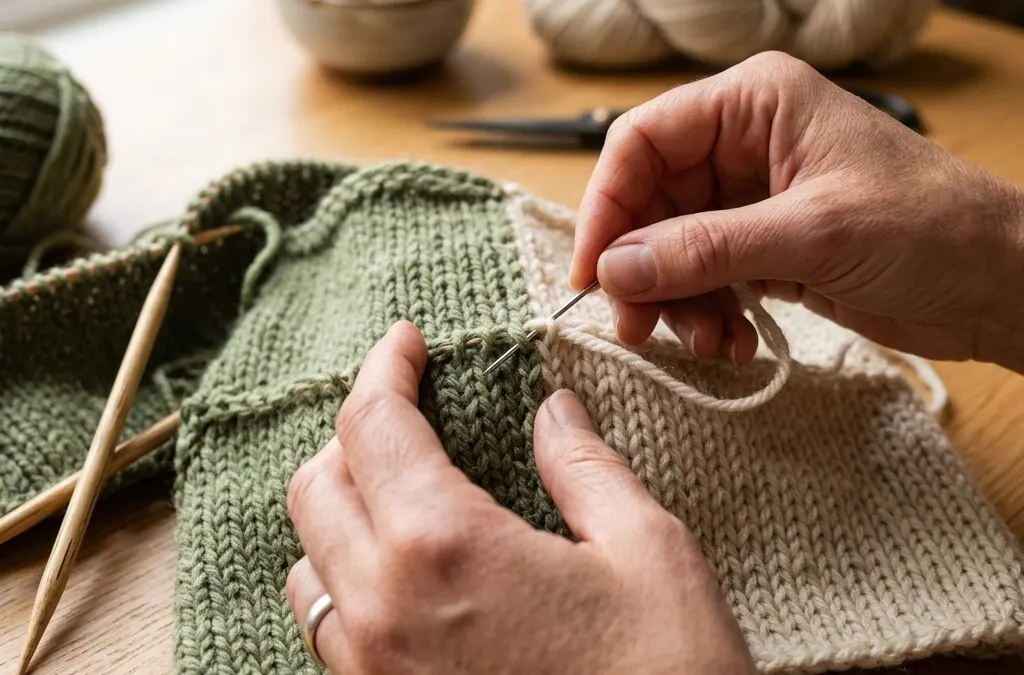
Learning to knit really comes down to two movements: the knit stitch and the purl stitch. Everything else — ribbing, seed stitch, stockinette — is a combination of those two. That sounds simpler than it feels the first few evenings. If your stitch count changes on its own at first, that's part of learning; it settles as your hands do.
You don't need to buy much to start: one ball of medium-weight yarn in a light color you can actually see the stitches in, and a pair of needles in the size the ball band recommends. Dark yarn and thin needles make it harder to see what you are doing. The pages below take you through equipment, the basic techniques and the questions that come up again and again.
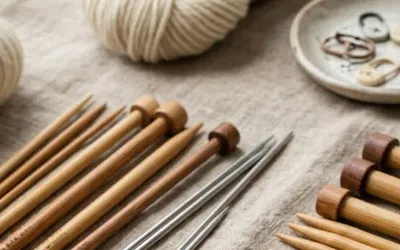
Basics
Needles, yarn and yarn weights, and how to choose your first project.
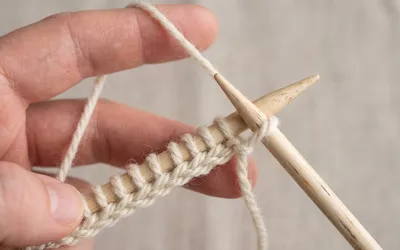
Technique Bank
Step-by-step guides to casting on, knit and purl, binding off and more.
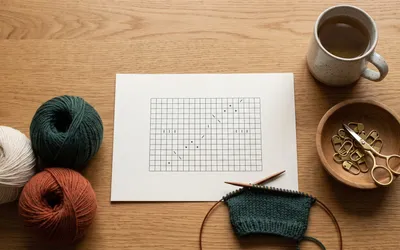
Reading Patterns
Size numbers, repeats, abbreviations and charts — how to read what a pattern asks for.
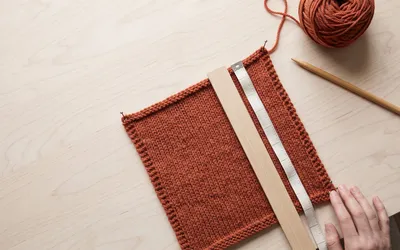
Gauge
Why the number of stitches per 4 inches decides whether a garment fits.
Tips & FAQ
Answers to the questions new knitters ask, and the tips that save you from ripping back.
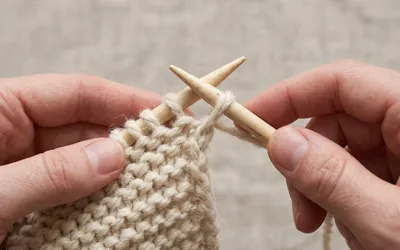
What should I knit?
Ideas for what to knit next once the first project is off the needles.
The path to your first project
The order we'd learn in, from an empty needle to a finished piece.
Get the right equipment
Needles and yarn that are easy to learn on — and why a light, smooth, medium-weight yarn makes the first evenings easier.
Read about equipment →Cast on
Put the first stitches on the needle. We start beginners on the long-tail cast-on.
See the cast-on guide →Learn the knit stitch
Knit every row and you have garter stitch — enough for a whole first project.
Learn the knit stitch →Learn the purl stitch
The mirror image of the knit stitch. With knit and purl you can work stockinette, ribbing and seed stitch.
Learn the purl stitch →Bind off
Finish the edge so the stitches can't unravel, then weave in the ends.
See the bind-off guide →Knit your first project
A dishcloth uses only what you've learned so far: cast on, knit, bind off.
See our dishcloth pattern →